


What Is Shock Hysteresis and Why Does It Matter?

.jpg)
Most racers spend their time evaluating spring rates, damping curves, ride heights, and tire data. Shock hysteresis rarely enters the conversation, despite having a direct impact on how effectively a damper responds to track inputs.
In the simplest terms, shock hysteresis is the difference between the force a damper is designed to produce and the force that actually reaches the suspension system after internal losses are accounted for. Those losses can come from seal friction, fluid shear, component deflection, and other mechanical resistance inside the shock absorber. The greater the hysteresis, the more energy is consumed within the damper before it can be used to control wheel and chassis movement.
For a racing suspension, this matters because every force generated by the shock ultimately influences tire load. When a damper responds quickly and predictably, the tire can maintain more consistent contact with the racing surface. When internal friction and force lag increase, the suspension becomes less responsive to small inputs and less precise during rapid transitions.
Shock hysteresis is not a theoretical engineering concept reserved for laboratory testing. It is measurable on a shock dyno, visible in force traces, and often noticeable in vehicle behavior. Engineers use hysteresis data to evaluate damper efficiency, compare shock designs, and identify opportunities to improve responsiveness. As shock dyno manufacturers point out, even small amounts of mechanical deflection in the test equipment itself can show up in the data as additional lag or hysteresis, which is part of why stiffness and precision matter on both sides of the test. 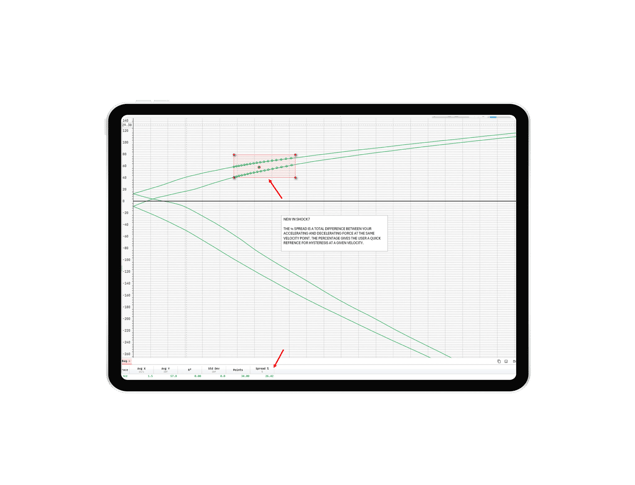
Understanding shock hysteresis requires looking beyond peak force numbers and focusing on how a shock produces force throughout an entire cycle of compression and rebound. In the sections that follow, we'll examine what causes hysteresis, how it appears in dyno testing, and why reducing hysteresis remains a key objective in high-performance racing shock design.
What Causes Shock Hysteresis in a Shock Absorber?
Shock hysteresis is not created by a single component. It is the cumulative result of energy losses that occur as the damper moves through compression and rebound. Every source of friction, restriction, and compliance inside the shock contributes to the difference between theoretical damping force and the force ultimately delivered to the suspension.
One of the largest contributors is seal friction. The rod seal assembly must maintain constant contact with the shock shaft to contain oil and prevent contamination from entering the damper. While necessary, that contact creates resistance that must be overcome before the shock can respond to movement. At very low shaft speeds, seal drag can account for a significant portion of the force measured on a shock dyno. Over time, seals and the oil around them wear and degrade, which is one reason routine maintenance plays such a large role in keeping hysteresis in check.
Hydraulic losses also contribute to hysteresis. As oil moves through bleed circuits, piston ports, and shim-controlled valve stacks, energy is consumed through fluid shear and flow restriction. This is fundamentally different from the damping force engineers intend to generate. Effective shock design seeks to maximize controlled damping while minimizing unnecessary hydraulic losses that add lag and reduce responsiveness.
The valve system itself can introduce hysteresis. When a shim stack deflects under load, it does not always return to its unloaded state instantaneously. The opening and closing characteristics of the valving may vary slightly depending on load direction, shaft speed, and pressure conditions within the damper. These effects become particularly visible during compression-to-rebound transitions where force traces separate on a dyno graph.
Structural compliance is another source that is often overlooked. Shock shafts, pistons, valve components, bearing assemblies, and even the shock body deform under load. Although these deflections are extremely small, they temporarily store energy before releasing it back into the system. The result is additional force lag that contributes to the overall hysteresis loop.
Temperature can amplify many of these effects. As shock oil heats up, viscosity changes alter flow characteristics through the valving system. Seal materials can also behave differently as temperatures rise, changing friction levels throughout a race. This is one reason why hysteresis measurements are often evaluated alongside thermal stability when comparing high-performance racing dampers, and why worn seals and degraded oil tend to make hysteresis worse as a season goes on.
No racing shock can eliminate hysteresis entirely. The goal is to reduce unnecessary losses so that damping forces are generated and transmitted as directly as possible. A low-hysteresis damper reacts more precisely to suspension inputs, making tuning changes more predictable and allowing the tire to follow the racing surface with fewer compromises.
How Shock Hysteresis Is Measured on a Shock Dyno
The most common method of evaluating shock hysteresis is with a damper dynamometer, commonly referred to as a shock dyno. By cycling the shock through controlled strokes at predetermined velocities, engineers can measure the force generated throughout compression and rebound. The resulting data provides a detailed picture of how the damper behaves under load and where energy losses occur within the system.
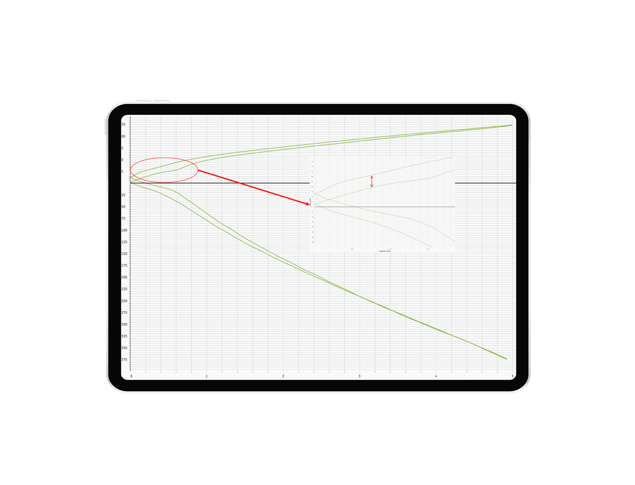
Unlike a simple force test, a shock dyno captures the entire force history of the damper. Engineers are not only interested in how much force the shock produces at a given velocity, but also how quickly it responds when conditions change. Direction reversals are particularly important because they reveal how efficiently the shock transitions from compression to rebound and back again.
On a force-versus-velocity graph, hysteresis often appears as a separation between the compression and rebound traces near the center of the graph. On a force-versus-displacement plot, it appears as a loop created as the shock cycles through its stroke. The larger the loop, the more energy is being absorbed by friction, compliance, and other internal losses instead of contributing to controlled damping.
Low-speed dyno testing frequently exposes hysteresis more clearly than high-speed testing. At higher shaft velocities, hydraulic forces tend to dominate the graph. At lower velocities, the influence of seal drag, component friction, and force lag becomes easier to identify because those losses represent a larger percentage of the total measured force. This is closely related to how low-speed and high-speed compression adjusters work, since both are tuning the same low-velocity region of the curve where hysteresis is most visible.
Engineers often compare hysteresis characteristics when evaluating different shock designs, seal packages, valving configurations, and manufacturing tolerances. Two dampers may produce nearly identical peak force numbers while exhibiting very different hysteresis behavior. In those situations, the damper with lower hysteresis will generally deliver force more consistently and respond more accurately to suspension movement.
For racing applications, dyno testing provides more than a pass-or-fail evaluation of a shock absorber. It serves as a tool for understanding how efficiently the damper converts wheel movement into usable damping force. The tighter and more controlled the force traces, the closer the shock is operating to its intended performance potential.

Why Low Shock Hysteresis Improves Tire Contact and Suspension Performance
A racing shock exists for one reason: to manage the forces acting on the tire. Everything the damper does, controlling chassis motion, managing weight transfer, stabilizing aero platforms, and improving driver feel, ultimately comes back to maintaining the most effective tire contact possible. Any energy lost within the shock is energy that is not being used to control the tire.
Low hysteresis allows the damper to respond more directly to wheel movement. When the tire encounters a bump, curb, seam, or surface irregularity, the shock can begin generating the intended damping force with less internal resistance to overcome. The result is a suspension system that reacts more faithfully to track inputs rather than spending time and energy overcoming friction within the damper itself. The relationship between wheel rate, motion ratio, and what the tire actually feels is a useful way to think about how much of that intended force is actually being put to work.
This becomes especially important in low-amplitude, high-frequency events. Track surfaces are rarely smooth, and many of the inputs affecting grip occur in movements measured in fractions of an inch. If excessive seal drag or internal friction prevents the shock from responding to these small inputs, the tire may spend less time following the surface and more time unloading. This is part of why ride frequency and natural frequency are such useful diagnostic tools, since a damper with high internal losses can mask or distort how a corner is actually oscillating.
The effects are often most noticeable during transitional phases of vehicle dynamics. Turn-in, braking zones, curb strikes, and throttle application all require the suspension to change direction and load rapidly. A low-hysteresis damper can reverse force direction more efficiently, helping maintain platform control while keeping the tire loaded more consistently throughout the transition.
Driver confidence is frequently an indirect benefit of reduced hysteresis. When damping forces are delivered predictably, the vehicle's response to steering, braking, and throttle inputs becomes more repeatable. Drivers may not describe the sensation as lower hysteresis, but they often describe it as improved feel, better compliance, or a car that is easier to place consistently at the limit.
From a tuning standpoint, lower hysteresis can also make setup changes more meaningful. When internal losses are minimized, adjustments made through valving, bleed settings, or external adjusters have a more direct effect on vehicle behavior. Understanding how low-speed damping differs from high-speed damping helps explain why these adjustments matter so much once hysteresis is under control. This allows engineers and tuners to evaluate changes with greater confidence because fewer variables are being masked by friction and force lag within the shock itself.
How High-Performance Racing Shocks Reduce Hysteresis
Reducing hysteresis begins with friction control. Every time the shock shaft changes direction, the seal package and rod guide create resistance that must be overcome before the damper can respond to suspension movement. Lowering that resistance improves sensitivity, particularly in low-speed shaft movements where friction can represent a significant percentage of the total force being generated.
Seal design plays a major role in this process. A racing shock must contain hydraulic pressure while minimizing drag on the shaft. Material selection, seal geometry, surface finish, and manufacturing consistency all influence how much friction is generated during operation. Small changes in these areas can produce measurable differences on a shock dyno.
Shaft finish is equally important. Microscopic imperfections increase friction and accelerate wear over time. Precision-ground and highly polished shafts provide a smoother sealing surface, allowing the shock to move more freely while maintaining durability in demanding racing environments.
Internal component rigidity affects hysteresis as well. When pistons, valve components, or shock bodies deflect under load, a portion of the suspension input is absorbed before force reaches the tire. Increasing stiffness throughout the damper helps reduce these losses and creates a more direct transfer of force through the suspension system. The choice of piston and valving components has a direct effect here, since piston geometry and stack design influence both rigidity and flow.
Fluid selection is another factor. Shock oil must maintain stable viscosity across a wide operating temperature range while flowing predictably through the valving system. Variations in fluid behavior can change force characteristics and increase hysteresis as temperatures rise during a race.
Manufacturing tolerances often separate premium racing dampers from lower-end designs. Clearance variation between internal components can introduce inconsistency from one shock to another, making tuning more difficult and increasing unwanted mechanical losses. Tight tolerances help ensure the shock behaves as intended throughout its operating range, which is also why the choice between single and double adjustable shocks matters: more adjustability is only useful if the underlying tolerances are tight enough for those adjustments to be repeatable.
The objective is not to eliminate hysteresis completely. Every hydraulic damper contains some level of friction, compliance, and energy loss. The goal is to reduce those losses as much as practical so the forces generated by the valving system are transmitted to the suspension with greater accuracy, consistency, and repeatability.

How Penske Racing Shocks Engineers for Low Hysteresis Performance
Low hysteresis is not the result of a single component or design feature. It is the product of hundreds of engineering decisions that affect how efficiently force moves through the damper. Component design, machining accuracy, material selection, assembly procedures, and quality control all influence the amount of energy lost inside a shock absorber.
At Penske Racing Shocks, minimizing unnecessary friction begins with precision manufacturing. Internal components are produced to exacting tolerances to ensure consistent interaction between shafts, pistons, seals, and bearing surfaces. This level of precision helps reduce variation from one shock to another while promoting smoother and more predictable operation throughout the damper's travel, and it carries through into our racing shock services as well.
Component stiffness is another important consideration. Under racing loads, every part of the shock absorber is subjected to significant forces. Maintaining structural integrity throughout the assembly helps ensure that suspension inputs are translated into controlled damping forces rather than being absorbed through internal deflection.
Valving design plays a central role in hysteresis management. A shock may produce the desired force numbers on a dyno sheet, but the manner in which those forces are generated is equally important. Penske engineers focus on creating damping characteristics that respond consistently across a wide range of shaft speeds while minimizing unwanted force lag during directional changes. Our double adjustable shock options are built around this same principle, giving separate control over compression and rebound without sacrificing consistency.
Validation extends beyond design and manufacturing. Shock dynamometer testing allows engineers to evaluate force traces, transition behavior, and repeatability throughout the development process. By analyzing these characteristics, it becomes possible to identify sources of unwanted hysteresis and verify that design improvements produce measurable results. This is part of the broader process we walk through when helping racers master suspension tuning.
For racers, the benefit is not simply lower friction. The benefit is a damper that responds more predictably to tuning changes, maintains greater consistency over a race distance, and provides a more direct connection between suspension movement and damping force. When engineers and drivers make setup adjustments, they can have greater confidence that the changes they feel are the result of tuning decisions rather than internal losses within the shock.
Shock Hysteresis Is More Than a Dyno Number
Shock hysteresis is often discussed in the context of laboratory testing, but its effects extend far beyond a dyno graph. Every lap, the suspension is responding to braking loads, cornering forces, surface irregularities, curbing, and weight transfer events. The efficiency with which a damper converts those inputs into controlled damping force influences how effectively the tire remains connected to the racing surface. This is one reason skipping a shock rebuild before the season can quietly increase hysteresis without anyone realizing it until handling starts to suffer.
A shock absorber can produce impressive force numbers on paper and still give up performance through excessive internal losses. Friction, compliance, and force lag all affect how quickly the damper reacts to changing conditions. Looking only at peak force values provides an incomplete picture of how the shock will behave once it is installed on the vehicle.
This is why engineers evaluate more than force output when developing and testing racing dampers. Hysteresis data helps reveal how efficiently a shock operates throughout the entire compression and rebound cycle. Lower hysteresis generally means more consistent force delivery, improved responsiveness, and a suspension package that more accurately reflects the intentions of the tuner. If a car that used to handle well starts feeling vague or inconsistent, working through a shock rebuild to solve handling issues is often where rising hysteresis first becomes visible.
For racers searching for incremental gains, those details matter. Small improvements in damper efficiency can influence tire loading, vehicle balance, driver confidence, and setup repeatability. Understanding shock hysteresis provides another tool for evaluating suspension performance and another reason why damper design extends far beyond the force numbers printed on a dyno sheet.
Conclusion: Why Shock Hysteresis Matters in Racing Suspension
Shock hysteresis describes the energy losses that occur inside a damper as it moves through compression and rebound. Those losses originate from friction, hydraulic resistance, component compliance, and other mechanical factors that influence how efficiently damping force reaches the suspension system. While some hysteresis is unavoidable, excessive hysteresis can reduce responsiveness and make the damper less effective at controlling tire load.
For racers, hysteresis is not simply an engineering measurement. It affects how the car responds to track inputs, how consistently the suspension performs over a run, and how accurately setup changes translate into on-track results. A shock that delivers force with less internal loss gives engineers and drivers a clearer connection between tuning decisions and vehicle behavior. If you want a broader primer on how all of these parts fit together, Racing Shocks Explained in Less Than 10 Minutes is a good place to start.
That is why hysteresis remains an important consideration in modern damper development. Beyond force curves and peak dyno numbers, the most effective racing shocks are designed to generate damping force efficiently, consistently, and predictably. Understanding hysteresis provides a deeper look into shock performance and helps explain why damper design continues to play such a critical role in competitive motorsports. If you're ready to see how this thinking translates into a built shock, shop the full Penske Racing Shocks lineup or learn more about the S3 setup support program to get hands-on help applying it to your car.