

Are Cheaper Shocks Good Enough? The Real Cost of Cheap Racing Shocks and Why Initial Price Doesn't Tell the Whole Story

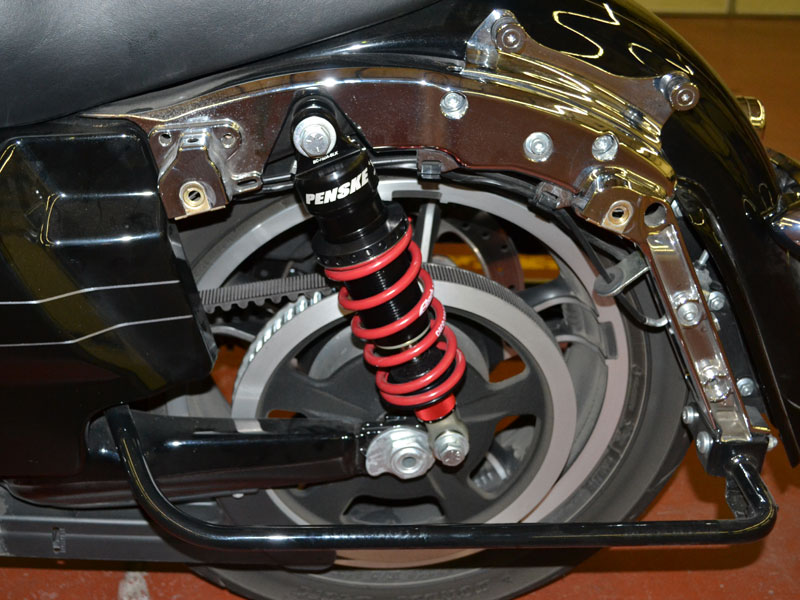
Cheap shocks will look fine at first. They fit, the car sits right, and everything seems okay. But once they start working under real load, the difference shows fast.
The problem isn't always something obvious like a leak or a broken part. It's inconsistency. The car feels balanced one session and completely different the next. The damping (the shock's ability to control spring movement and keep the tire planted) fades as heat builds. The platform moves around. The driver stops trusting what the car is doing.
That inconsistency comes from shortcuts in manufacturing. Lower-grade shocks are built with looser tolerances, cheaper seals, and fluid that can't handle sustained temperature or pressure. Once that starts to break down, the shock stops doing its job the same way every lap.
At that point, nothing else on the car can be tuned properly. The springs, bars, and tires might be perfect, but the data won't match from run to run. Every change feels like a guess because the damper is inconsistent.
The rest of this piece breaks down why that happens, including how low-quality shocks fail, what it costs on the track, and what separates precision-built, race-grade dampers from the ones that just look the part.
Shocks determine whether a driver can trust the car lap after lap. Without that foundation, nothing else works.
The Hidden Problem With Cheap Shocks
Most racers don't start out trying to cut corners. They buy cheaper shocks because, on paper, they look close enough. The body style matches, the valving numbers line up, and someone says they "work just like" a premium set. On the surface, it all checks out. The car scales fine, the driver feels comfortable, and the first few test sessions don't show any red flags. That's where the trap is.
Cheap shocks usually pass the early tests because they only fail when they're asked to work. At low load and low heat, the damping feels consistent. Once the shock starts cycling under real track conditions, everything changes. The fluid breaks down, the seals start to swell, and the damping curve moves around. Lap after lap, that change builds until the driver can't trust what the car is doing anymore. It's not a sudden failure, it's a slow drift into inconsistency.
That's the real danger of "good enough." When a damper fades, the balance of the car changes in ways that look like setup issues. Tire temps start to wander, brake feel gets softer, and the car might push one session and snap loose the next. The team starts chasing those problems with springs, bars, and pressures, but none of it fixes the root cause. The damper is no longer repeating the same motion every time. The data stops lining up, and every adjustment becomes a guess.
Racers tell themselves the car just "feels different today" or that the track changed, but what's really happening is loss of control at the damper level. The shocks can't hold their shape under heat, and that inconsistency turns every other variable into noise. Once that happens, you can't build a baseline. You're tuning around a moving target.
That's why "good enough" parts always cost more in the end. They don't fail fast, they fail slow. You waste weekends chasing setup changes that should have worked, you go through tires quicker, and you end up rebuilding confidence every time you unload. Cheap shocks fool you at first because they act the part. But once the conditions get real, they expose every shortcut built into them, and that's when performance stops improving.
Inside the Shock: Where Cheap Manufacturing Fails
Every shock looks the same from the outside. It's the inside that separates a race-grade damper from something built for price. A few thousandths of an inch in machining tolerance can decide whether a car stays planted or drifts out of control. It's the inside that separates a race-grade damper from something built for price and machining tolerance.
Cheap shocks are built with wide tolerances (often ±0.010" or greater on critical bore dimensions) and rougher surface finishes. The piston doesn't center perfectly in the bore, so it drags on one side. The shims don't sit completely flat, which changes how they flex under pressure. The oil is often generic hydraulic fluid with poor viscosity stability and a low viscosity index (VI) rating of 95 to 110. Understanding how shock absorber fluid viscosity affects damping characteristics is essential for recognizing quality differences. When the temperature rises from ambient to operating conditions (often exceeding 80 to 100°C during intense track sessions), damping force can drop by 15 to 25 percent. After a handful of laps, what started as a predictable curve turns into a moving target.
The difference in craftsmanship becomes clear when you see the components side by side. In a true racing shock, the piston and bore are matched to near-zero clearance (typically ±0.0005" or tighter). The rod is polished and straight within microns, reducing seal drag and friction losses. The fluid has a controlled viscosity index (VI 140 or higher) so it maintains the same flow rate hot or cold, with damping force variance staying within 2 to 3 percent across a 40 to 100°C temperature range. The gas charge is consistent and sealed properly to prevent cavitation. Nitrogen precharge is carefully calibrated to exact pressure specifications, often verified to ±0.5 psi. Every fastener and seal is chosen for repeatability, not cost. That precision is what gives a driver confidence lap after lap, not the look of the part or the number printed on the box.
When a shock is built correctly, the damping curve repeats. The car reacts the same on the first lap as it does on the fiftieth. The driver can trust what the chassis is telling them, and the data actually means something. That consistency only happens when each component is machined, assembled, and tested with care.
Cheap shocks skip that step. They're built fast, assembled in batches, and shipped without verification. The cost savings come from time, not innovation. And that time saved on the factory floor turns into hours lost at the track trying to fix problems that shouldn't exist.
How Cheap Shocks Fail on Track
When a shock isn't built correctly, the failure doesn't happen all at once. It shows up slowly, through inconsistency. The car might feel solid for a few sessions, then suddenly the balance starts to move around. The front end doesn't respond the same way every corner. The rear feels unpredictable under throttle. What used to feel stable now feels vague.
That change is the result of the shock losing control. As the internal temperature rises, the fluid thins, the seals expand, and the damping characteristics drift. The car starts to move more than it should under braking or cornering. The platform rolls and pitches further each lap. You can see it in the way the car sits and how it reacts to steering input. It's just not holding its shape.
Once that happens, tuning becomes guesswork. You can make spring or tire changes, but the results never line up because the shock itself isn't repeating its behavior. One lap feels connected; the next feels loose. The driver starts adjusting to the car instead of the car responding to the driver. That's when performance stalls.
Inconsistent shocks kill performance by making the car unpredictable. Drivers lose confidence, and without that, lap times drop.
The Hidden Costs of Cheap Shocks
When shocks don't perform consistently, the problems don't stay limited to the suspension. They spread through every part of the car's setup. What starts as a small loss of control becomes a chain reaction that affects tires, balance, and driver confidence. How tire wear patterns reveal suspension issues is often overlooked by racers trying to chase setup changes.
Uneven tire loading comes first. Next comes time. A car with unstable shocks can't be tuned efficiently. Every setup adjustment produces different results because the baseline keeps shifting. Teams end up testing longer, changing more parts, and wasting track sessions trying to chase consistency that the shocks can't deliver. That wasted time is often more expensive than the parts themselves.
Then there's confidence. When a driver can't rely on the car to behave the same way from one lap to the next, they start to hold back. The car feels unpredictable, so they drive within a smaller margin. It doesn't take much inconsistency to create hesitation, and once that happens, lap times slow down even if the equipment looks fine on paper.
Cheap shocks damage everything around them. Tire wear accelerates. Setup data becomes worthless. Driver hesitation costs seconds per lap. For drivers struggling with inconsistent data, understanding how to properly read shock dyno graphs can help identify root causes of performance issues before they become major problems. Additionally, common racing suspension issues often stem from damper inconsistency rather than any other single component.
What Quality Shocks Actually Do
A well-built shock doesn't need to be adjusted constantly or explained with marketing terms. It just works, lap after lap, in heat or cold, on new tires or old ones. The difference starts long before it's bolted to the car.
High-quality shocks are built with precision from the inside out. Tight machining tolerances keep fluid flow consistent. Smooth surface finishes reduce friction and prevent seal drag. The oil maintains its viscosity under heat, and balanced gas pressure prevents cavitation. The damping force stays the same from first lap to last.
This level of build quality shows up in how the car behaves. The chassis stays stable under braking. The tires stay evenly loaded through corners. The balance doesn't change when temperatures rise. When the shock repeats its motion exactly, every other part of the setup starts working the way it should. Springs, bars, and tires can be tuned accurately because the baseline never moves.
Precision and craftsmanship create repeatability. That repeatability is what allows a driver to push harder with confidence and lets engineers trust their data. Learning how to properly use a shock tuning guide and understanding the fundamentals of adjusting low and high-speed damping are critical skills that separate top competitors from the middle of the pack. Professional suspension tuning resources emphasize the importance of consistent damping as the foundation for all other setup work.
Penske Racing Shocks: Built by Hand, Proven by Data
Everything that separates a good shock from a cheap one is built into everyPenske Racing Shock. The precision machining, the material quality, the consistency, and none of it happens by chance. It's the result of a process built around control and repeatability.
Penske Racing Shocks are billet-machined and hand-built in the United States. Every piece is cut, measured, and matched by the same technicians who support professional teams across motorsport. There are no assembly lines, no cast housings, and no off-shore parts. Each shock is built for a specific application, verified for accuracy, and tested to confirm that it performs exactly as designed before it ever leaves the shop.
That level of attention to detail shows up where it matters. The damping remains stable under heat. The piston moves freely without friction or stiction. The oil maintains its properties from one session to the next. When a car runs on Penske shocks, the feedback from the chassis is clean and consistent. It reacts the same way every time, which means setup adjustments actually translate to performance gains.
This consistency comes from refusing to cut corners. Penske's process was developed to meet the demands of top-level racing, where one degree of body roll or a tenth of a second in response time can change the outcome. Whether you're competing in dirt late model racing or drag racing applications, Penske has developed proven solutions for champions.
The S3 Process: Shock + Setup + Support
Building a great shock is only part of the equation. How that shock is matched to the car, tuned for its purpose, and supported over time is what keeps it performing at its peak. That's the foundation of Penske's S3 Process, which is a complete system built around three principles: Shock, Setup, and Support.
Every customer begins with direct communication with the same technicians who build the shocks. They take the time to understand the vehicle, the driving conditions, and the goals before a single part is made. The information gathered, from mounting points to motion ratios and spring data, ensures that each shock is built for a specific application, not as a general fit.
Once the build begins, every step follows the same standard used in top-level racing. The shocks are machined, assembled, and tested by hand, with all measurements and force data recorded. Before they're shipped, each unit is verified for accuracy and consistency, and the data is stored permanently for future reference. That means if a customer ever needs a rebuild or an adjustment, Penske can match the original build exactly.
After the shocks are delivered, the same technicians remain available for setup questions, performance feedback, and adjustments. Customers are encouraged to share how the car feels on track so fine-tuning can continue over time. It's a partnership that extends well past the initial purchase.
The final piece of the S3 approach is continued education. Penske offers guidance, documentation, and real-world feedback to help every customer understand how to get the most out of their suspension. For those interested in learning more about suspension fundamentals, check out comprehensive suspension tuning resources and best practices, explore Penske's top suspension tuning tips, and study advanced suspension tuning processes from industry leaders.
The Economics of Quality: Why Premium Pays Off
When you compare the cost of cheap shocks to a precision-built system, the numbers rarely tell the full story. The price difference at checkout looks clear. The difference after a season of use is something else entirely.
Cheap shocks degrade quickly. The internal components wear faster, the damping changes with temperature, and rebuilds, if they're even possible, become more frequent or less effective. Over time, those small inconsistencies translate into more tire wear, longer setup sessions, and less reliable performance. What looked like a lower price ends up costing more in parts, labor, and lost track time.
A quality shock costs more upfront because it's built to last. High-grade materials, tight tolerances, and rebuildable designs extend their service life for years. Instead of replacing them, you service them. Instead of chasing balance every weekend, you build from consistent data. The investment pays off through reliability and reduced maintenance, not to mention the confidence of knowing the car will react the same way every time it goes out.
For teams that track budgets closely, that predictability matters. A shock that stays consistent saves money in ways that don't show up on an invoice. Fewer test days wasted on setup corrections, fewer tires burned trying to mask inconsistencies, and less time spent diagnosing problems that shouldn't exist. The performance stays stable, and the operating costs go down. Understanding how suspension setup impacts overall race performance shows that consistent dampers are the foundation for maximizing every other investment in the car.
Quality suspension means spending once. The same shocks that perform at a high level today can keep doing it season after season with regular service and support.
Why Cheap Shocks Cost You Control
In racing, control determines everything. Lose it, and setup falls apart. Data becomes noise. Driver confidence evaporates.
Cheap shocks erode control gradually. The damping fades. The balance shifts. Tires wear faster. What looked like a good deal becomes lost time and wasted effort.
Quality shocks hold damping under heat and give the car a predictable platform. Race suspension fundamentals show that shocks are the critical link between driver input and tire contact, making them worth every penny.
Shop Penske Racing Shocks for precision-built, fully serviceable suspension designed for consistent performance in every condition. Whether you're tuning a track car, a motorcycle, or an off-road vehicle, Penske delivers the consistency that cheap shocks never will. Learn from professional-level suspension setup guidance to understand exactly how quality shocks provide the foundation for competitive performance.