


What Is Shock Dyno Analysis Software, and Who Needs It?

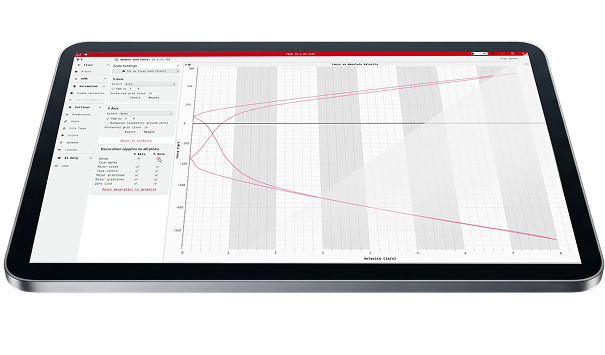
Shock dyno analysis software is the program used to build shock tests, capture the data those tests produce, and turn that data into plots an engineer can read and compare. It sits between the dyno and the decisions made about a damper, and no shop testing shocks seriously operates without one.
This article explains what the software does, what its output means, and which kinds of operations need it. It is written for anyone evaluating whether to add this capability, or trying to work out what the software they inherited with a used dyno is for.
What does a shock dyno produce on its own?
A shock dyno is a machine that strokes a shock through a controlled motion while measuring what it does in response.
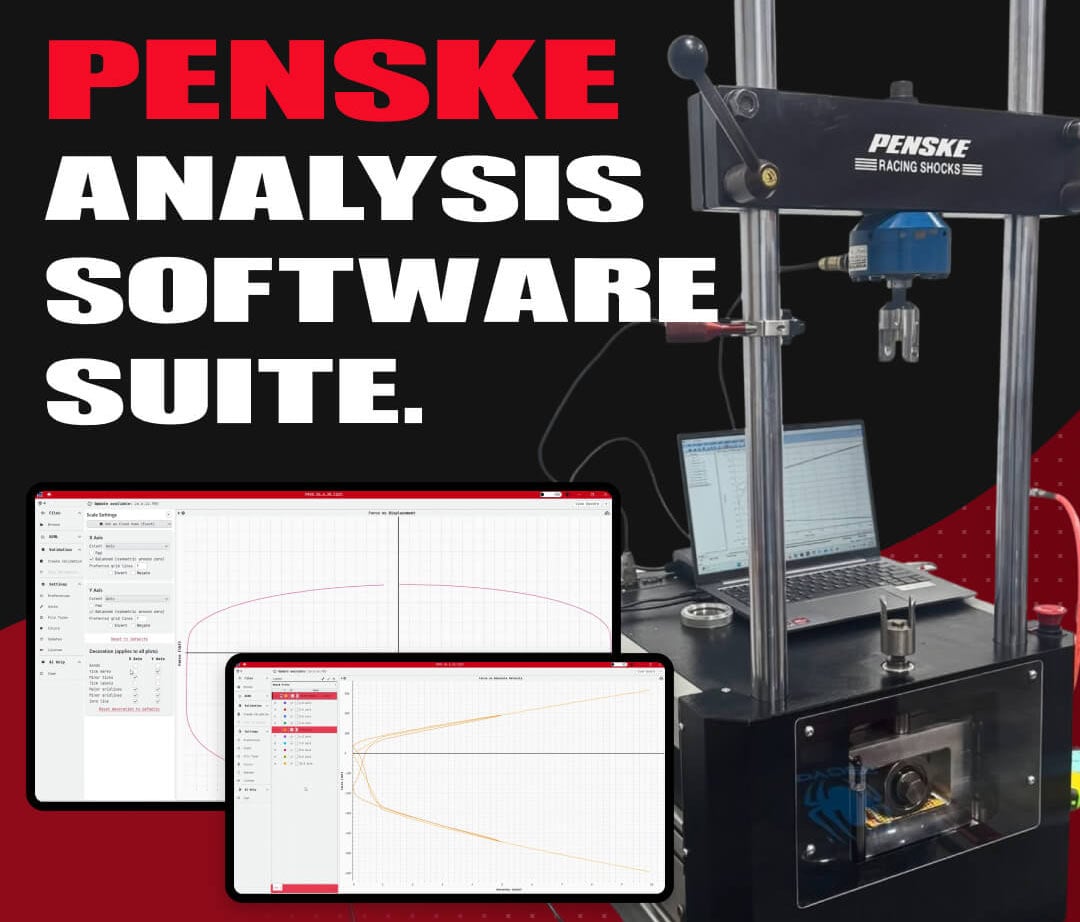
On a crank dyno, an electric motor drives a crank that moves the shock shaft in and out at known velocities. A load cell measures the force the shock generates as it resists that motion. A position sensor records where the shaft is at every instant during the stroke. Some machines add temperature measurement, since shock behavior changes as oil heats.
What the machine produces is a stream of numbers: force readings paired with position readings, sampled many times per second. That raw output describes the test accurately and communicates almost nothing on its own. Nobody reads a column of force values and forms an opinion about a shock.
What does shock dyno analysis software do?
The software handles four distinct jobs, and understanding them separately is useful when comparing products.
Building the test.
Before a shock is tested, someone has to define what the test will be: which shaft velocities to run, how far to stroke it, how many cycles at each velocity, and whether to warm the shock first. Analysis software provides the interface for defining that, and better packages include stored templates so a test that gets run frequently does not have to be rebuilt each time.
Capturing the data.
During the test, the software records the force and position readings and stores them as a file tied to the specific shock and configuration being tested.
Producing the plots.
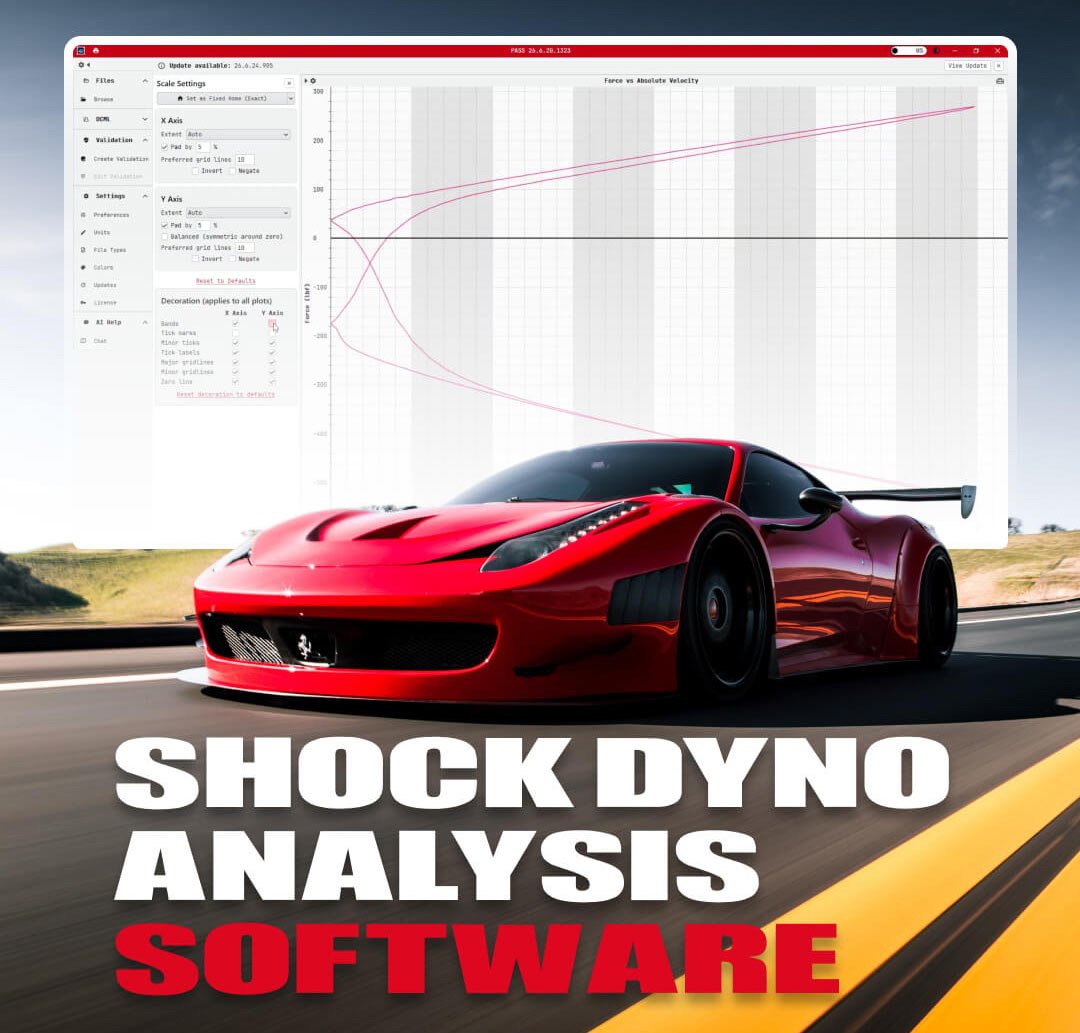
This is the part most people picture. The software converts the recorded readings into the standard views used in shock work: force plotted against shaft velocity, force plotted against displacement, gas force, and seal drag. These plots are what an engineer reads.
Storing and comparing runs.
Each test is saved and can be recalled later, overlaid against other runs, and exported into reports. A shop's accumulated archive of past runs is often its most valuable asset, and the software is what makes that archive searchable and comparable rather than a folder of unrelated files.
What does the output tell an engineer?
The primary output is the damper curve, which plots the force a shock produces against the speed at which its shaft is moving.
The low speed portion of that curve, generally below about (2” per second)
50 millimeters per second of shaft velocity, corresponds to motions caused by the car managing its own weight: body roll through a corner, pitch under braking, and how quickly the platform settles after a direction change. The high speed portion corresponds to motions forced on the wheel by the road surface, such as curbs, bumps, and broken pavement. Compression and rebound are read separately, because a shock that resists compression the way a car needs may not release that energy correctly on extension.
Reading those curves is how shock decisions get made. An engineer comparing a new build against a known baseline can see immediately whether a valving change moved the curve where it was supposed to, and by how much.
Who needs shock dyno analysis software?
Anyone who owns a shock dyno needs software to use it, so the more useful question is who needs a dyno and the analysis capability that comes with it. Several distinct groups do.
Shops that build or revalve shocks for customers.
This is the largest group. A shop selling a revalve is selling a claim about how the shock will behave, and the dyno curve is the evidence behind that claim. It is also how the shop verifies its own work before a shock goes back in a customer's hands, and how it defends that work if a customer questions it later.
Race teams running spec or controlled classes.
Many series specify shock requirements and test them. A team with its own dyno can confirm compliance before showing up at tech, check that a rebuilt shock matches the one it replaced, and identify a shock that has drifted over a season. Series with defined test procedures make this straightforward, and analysis software with stored templates for those series removes the setup work.
Race teams doing development work.
Teams tuning shocks as part of setup development need to know what they changed and what it produced. Without recorded curves, shock development is guesswork dressed up as experience.
Shock manufacturers and engineering groups.
Anyone designing shocks, validating production, or investigating warranty claims needs measurement rather than opinion, and needs it recorded in a form that can be referenced later.
Engineers who analyze data without running the machine.
Not everyone who reads damper curves operates the dyno that produced them. Race engineers, consultants, and technical staff frequently need to open, compare, and interpret runs sent to them by someone else, which is why free viewer software matters as much as the licensed version.
Do you need it for a small operation?
That depends less on scale than on what the shocks are for.
A shop rebuilding a handful of shocks a season for known applications can operate on experience and careful notes. Plenty do. The point at which measurement becomes necessary is when the work stops being repeatable from memory: when customers pay for a specific shock characteristic, when a series requires proof, when the same complaint keeps returning and nobody can tell whether the last change helped, or when the person holding the institutional knowledge is not going to be there forever.
Recorded curves also transfer between people in a way that experience does not. A shop with ten years of organized runs can train a new technician against real data. A shop without them cannot.
What to look for in shock dyno analysis software
Five things matter more than interface preferences.
Whether it opens the files you already have.
An archive of past runs exists in whatever format the program that recorded it used. Software that cannot read that format means starting the record over, which is the single most expensive thing a migration can cost a shop.
Whether it works with your dyno.
Analysis packages support specific hardware. Confirm compatibility with the actual machine, by serial number, before assuming anything.
How licensing works.
Some software is locked to a physical USB dongle, which means losing or breaking a small piece of hardware locks a shop out of its own data until it is replaced. Account-based license keys avoid that failure mode.
Whether the software is still being developed.
Windows changes, hardware changes, and a program that has stopped receiving updates will eventually stop working on current computers. Check the release history rather than the marketing.
Whether a free viewer exists.
Being able to send a run to an engineer, a customer, or a series official who can open it without buying a license is worth more than most feature comparisons.
PASS and where it fits
PASS, the Penske Analysis Software Suite, is shock dyno analysis software for Windows built by Penske Racing Shocks. It exists because Shock 6, the program most of this industry has used for the past twenty years, is no longer being actively developed for racing. Penske bought the remaining licenses, brought the original Shock 6 software author back in, and built PASS from the ground up.
Shock7 is the module for building dyno tests and capturing data, including predefined templates for common race series. DCML predicts what curve a shock build will produce before it is assembled, and works in reverse to return a build from a target curve. Demo Mode is free, does not expire, and opens any PASS file or existing Shock 6 file with the full set of analysis tools.
PASS opens existing Shock 6 files, uses account-based license keys rather than a dongle, and supports most Penske and Roehrig dyno hardware built in the last decade.
The free version is the sensible place to start for anyone evaluating this. Install it, open runs you already know, and see whether the data comes across the way it should. To ask about licensing or check what a specific dyno needs, contact us. Support and dyno integration are handled by our team in North Carolina.