


What Are Adjustable Shocks?

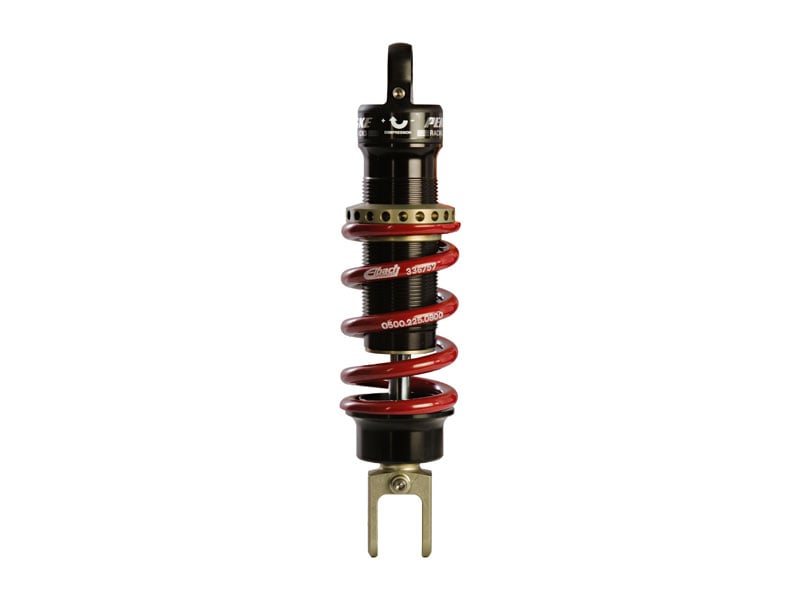
Adjustable shocks let you change how much damping the shock produces after it's installed on the vehicle. Depending on the design, you may be able to adjust compression, rebound, or both.
That means the same shock can be fine-tuned for different tracks, road conditions, or driving styles without replacing it or changing the internal valving every time the setup needs to move in a different direction.
Some shocks use one adjuster that changes compression and rebound together, like our 7300 Series. More advanced shocks such as the 8300 Series let you control compression and rebound separately. Triple-adjustable shocks like the 8760 Series go one step farther by dividing compression into low-speed and high-speed controls while keeping rebound independent.
More adjustment isn't automatically better. The right shock gives you the controls you actually need and can use consistently. The same principle applies across our automotive, motorcycle, and off-road lines.
What Can You Adjust on an Adjustable Shock?
The main adjustments found on a racing shock are compression and rebound damping. Both control how quickly the suspension moves, but they work during different parts of the shock's travel.
Compression damping controls how much the shock resists being pushed inward. The shock moves into compression when the tire hits a bump or when weight transfers through the vehicle under braking, acceleration, or cornering. Curbs and rough track surfaces can also create fast compression movement.
Adding compression damping makes the shock resist that inward movement more strongly. Reducing it lets the shock compress more easily. Too little compression damping can let the suspension move through its travel too quickly, which may make the vehicle feel soft or cause it to bottom out. Too much compression damping can make the vehicle feel harsh and prevent the tire from following the surface properly.
Rebound damping controls how quickly the shock extends after it's been compressed. Once the tire moves over a bump or the vehicle finishes transferring weight, the spring pushes the suspension back out. Rebound damping controls the speed of that return movement.
Adding rebound damping slows the extension of the shock, while reducing it lets the shock extend more quickly. If rebound is too fast, the vehicle may feel loose, springy, or unsettled. If it's too slow, the suspension may not recover before the next bump and can gradually ride lower through a series of impacts.
Compression and rebound work together, but they're not the same adjustment. That's why we build more advanced shocks that let you change them independently. Inside the shock, the range those adjusters cover is set by parts like the adjustable needle, the shim stack, and any bleed shims in the build.
Spring preload may also be adjustable, but it serves a different purpose. Preload changes how far the suspension settles under the weight of the vehicle and driver. It's mainly used to set sag or ride height, and it doesn't directly change compression or rebound damping. A preload adjuster tool and a ride height wrench are what you'll reach for there, not the damping clickers.
Non-Adjustable vs. Adjustable Shocks
A non-adjustable shock has a damping curve that can't be changed externally after the shock is installed.
That doesn't mean the shock is basic or poorly built. A non-adjustable shock can still be custom-valved for your specific vehicle, spring package, track, or type of racing. The valving comes down to the piston and shim stack chosen for the build. The difference is that changing the damping later normally requires the shock to be removed and internally revalved through a shock service request.
An adjustable shock gives you an external control that changes the damping within a set range. You can make that change without opening the shock.
That's useful when track conditions change or when your vehicle needs a different balance. You might want more control on a smooth track and a more compliant setting on a rough surface.
The adjuster doesn't replace correct valving. Your shock still needs to be built for the vehicle and application. External adjustment simply gives you room to fine-tune that starting setup.
What Is a Single-Adjustable Shock?
A single-adjustable shock uses one external control to change the damping.
On a standard single-adjustable setup, that control typically increases or decreases compression and rebound together, not independently. Turning the adjuster in one direction adds damping, while turning it the other way reduces damping.
This gives you a simple way to make the shock firmer or softer overall. It can be a good choice when your vehicle mainly needs broad balance changes rather than separate compression and rebound tuning.
For example, you may want to add damping as the track gains grip or reduce damping when the surface becomes rougher. A single adjuster lets you make that change without first having to isolate the problem to compression or to rebound.
Single-adjustable shocks aren't limited to casual driving. We use them successfully in racing applications where simple, repeatable changes are more valuable than having several separate controls. Our 7300 Series is one example built specifically for that kind of use, and the 7300 dirt late model build shows how the same platform gets configured for a specific class. You'll find single-adjustable options across our stock car and late model collections. On the motorcycle side, the 8900 Emulsion Single Adjustable follows the same idea.
The important question is whether compression and rebound need to move together. If they do, a single-adjustable shock may give you all the control your application needs.
What Is a Double-Adjustable Shock?
A double-adjustable shock gives you separate control over compression and rebound damping.
One adjuster changes compression, while the other changes rebound. This lets you address one part of the vehicle's movement without automatically changing the other.
That separation matters because compression and rebound problems can feel different. Suppose your vehicle feels harsh when it hits a bump, but the chassis also feels loose after the bump. You may want less compression damping so the suspension can absorb the impact more easily while adding rebound damping to slow the return movement.
A single-adjustable shock can't make those two changes independently, since reducing the single adjuster would normally reduce both compression and rebound together.
A double-adjustable shock gives you more control over how the vehicle reacts during different parts of the suspension cycle. Our 8300 Series is one example, with separate compression and rebound controls that let each side of the damping curve be tuned independently. The 8975 In-Line Double Adjustable and the 8983 Double Adjustable cover the same idea in different packages, and our sports car and street car collections show where they get used.

This level of adjustability is especially useful when track conditions change often, when compression and rebound need to move in different directions, or when you can clearly explain when a handling problem occurs. It also makes sense if you have enough testing time to evaluate one adjustment at a time. Our full comparison of single versus double adjustable shocks walks through more real racing situations to help you decide.
The added control creates more ways to get lost, so every adjustment should start from a known baseline. Write down the original settings, make one change at a time, and return to the starting point if the vehicle gets worse.
What Is a Triple-Adjustable Shock?
A triple-adjustable shock gives you independent rebound adjustment and separates compression into low-speed and high-speed controls.
Low-speed and high-speed refer to the speed of the shock shaft, not the speed of the vehicle.
Your race car can be traveling quickly while the shock shaft moves slowly through a smooth corner. It can also be moving at a lower vehicle speed when a curb, pothole, or sharp bump causes very fast shock movement.
Low-speed compression controls slower suspension movement caused by braking, acceleration, cornering, body roll, pitch, and gradual weight transfer. Adding low-speed compression can give the chassis more support during those movements, while reducing it lets the chassis move more freely.
High-speed compression controls sharper and faster shaft movement caused by bumps, curbs, potholes, rough track surfaces, hard landings, and sudden impacts. Adding high-speed compression makes the shock resist those inputs more strongly. Reducing it can help the suspension absorb them more easily.
Separating the two compression ranges lets you support the chassis without making the vehicle unnecessarily harsh over bumps. The full difference between low-speed and high-speed damping goes deeper into how each one shows up in real driving situations.
For example, a car may need more low-speed compression to control brake dive while still needing less high-speed compression to handle a rough section of the track. A triple-adjustable shock lets you make those two changes separately.
Our 8760 Series is one example of a triple-adjustable shock. It gives you independent low-speed compression, high-speed compression, and rebound controls, and it's one of the most widely used platforms we build. It shows up in our drag racing, sprint car, and open wheel collections, and the 8760 bearing and ride height wrench is the tool that goes with it.
A triple-adjustable shock offers a wide range of control, but it also requires a more organized tuning process. You and your team need to identify when the handling problem occurs and which type of shock movement is involved. Without that understanding, more adjusters can create confusion instead of improving the setup.
How Should You Adjust an Adjustable Shock?
Start with the recommended baseline from your shock manufacturer or builder.
Before changing anything, write down the current position of every adjuster. Count the clicks carefully and confirm which direction adds damping and which direction removes it. A bearing and ring nut wrench belongs in the toolbox alongside your click record, since jets and ring nuts on the shaft need the right tool rather than whatever is closest.
Make one small change at a time. If you change compression and rebound together, you may not know which adjustment improved or hurt the vehicle.
Run the vehicle under similar conditions after each change. Try to use the same section of track, similar tire condition, and consistent driver feedback whenever possible.
Describe the handling problem based on when it happens. A vehicle that feels harsh when it hits a bump may need a different change than one that takes too long to settle afterward. Brake dive, acceleration squat, corner-transition instability, and rough-track harshness all happen during different parts of suspension movement.
Those details are more useful than simply saying the shock feels too soft or too stiff.
If an adjustment doesn't improve the vehicle, return to the previous setting before making another change. Keeping clear notes prevents several small changes from moving the setup too far away from your original baseline. If you want a structured starting point, our Shock 101 training course and free damper tuning guide both cover this process.
What Adjustable Shocks Can't Fix
Adjustable shocks give you a useful tuning range, but they can't correct every suspension problem.
An external adjuster can't fully compensate for the wrong spring rate, incorrect shock length, poor suspension geometry, worn components, bad alignment, incorrect tire pressure, internal damage, or valving that's far outside the needs of the application. Bottoming that shows up at every setting usually points to a spring or a bump rubber problem rather than a damping one.
If your vehicle only works with an adjuster at the full hard or full soft position, the base setup may need attention. The shock may require different internal valving rather than another external adjustment.
The same is true when your vehicle's behavior changes suddenly. If a setting that worked before no longer produces the same result, the shock may need inspection, service, or dyno testing.
Adjustability is meant to fine-tune a correct setup. It shouldn't be used to hide a larger mechanical or setup problem.
Get the Right Adjustable Shock for Your Application
Choosing an adjustable shock starts with how your vehicle will be used, and the most advanced shock isn't automatically the right choice. You'll often get better results from a single-adjustable shock you understand and use consistently than from a triple-adjustable shock with controls you're not sure how to read.
Before you reach out to us, gather your vehicle's year, make, model, weight, spring rates, racing series, track type, current shock package, and any rules that limit adjustment. It also helps to explain your experience level and how often you expect to make setup changes.
Describe the current problem in plain language. Explain when the vehicle feels harsh, loose, slow to settle, or difficult to control. You don't need to diagnose the problem as compression or rebound before asking for help.
We can use your vehicle information, driver feedback, and application requirements to select the correct shock and adjustment level. The goal isn't to put the largest possible number of adjusters on your vehicle. It's to give you the controls you actually need for the setup decisions you expect to make.
Connect with us through the S3 process to discuss which adjustment level fits your application, from non-adjustable through triple-adjustable. If your current shocks need attention first, start a shock service request. To work through a local shop, use the dealer locator, and for anything that doesn't fit a standard part, our custom manufacturing team can help.
Ready to browse? Start with the automotive, motorcycle, or off-road collections, or go straight to shocks and parts.
Adjustable Shocks FAQs
What is an adjustable shock? An adjustable shock lets you change its damping externally after it's installed. Depending on the shock, you may be able to adjust compression, rebound, or both.
What is the difference between single- and double-adjustable shocks? A single-adjustable shock typically changes compression and rebound together using one control. A double-adjustable shock gives you separate compression and rebound controls so each can be changed independently.
What does compression adjustment do? Compression adjustment changes how strongly the shock resists being pushed inward. It affects how the suspension responds to bumps, braking, acceleration, cornering, and other movements that compress the shock.
What does rebound adjustment do? Rebound adjustment changes how quickly the shock extends after being compressed. It controls how the suspension returns after a bump or weight-transfer movement.
What is the difference between low-speed and high-speed compression? Low-speed compression controls slower shock-shaft movement caused by braking, acceleration, cornering, and weight transfer. High-speed compression controls faster shaft movement caused by bumps, curbs, potholes, and rough surfaces. The terms describe shock-shaft speed, not vehicle speed.
Are triple-adjustable shocks worth it? A triple-adjustable shock can be valuable when you need separate control over low-speed compression, high-speed compression, and rebound. It's only worth the added complexity when you and your team understand the controls and have enough testing time to use them properly.
How do I know if my adjusters are still working correctly? Dyno testing shows the force curve at each adjuster position, so you can see the actual range instead of assuming it. If the curve barely moves between full soft and full hard, the shock needs service.