

Should Your Racing Team Own or Rent a Shock Dyno?

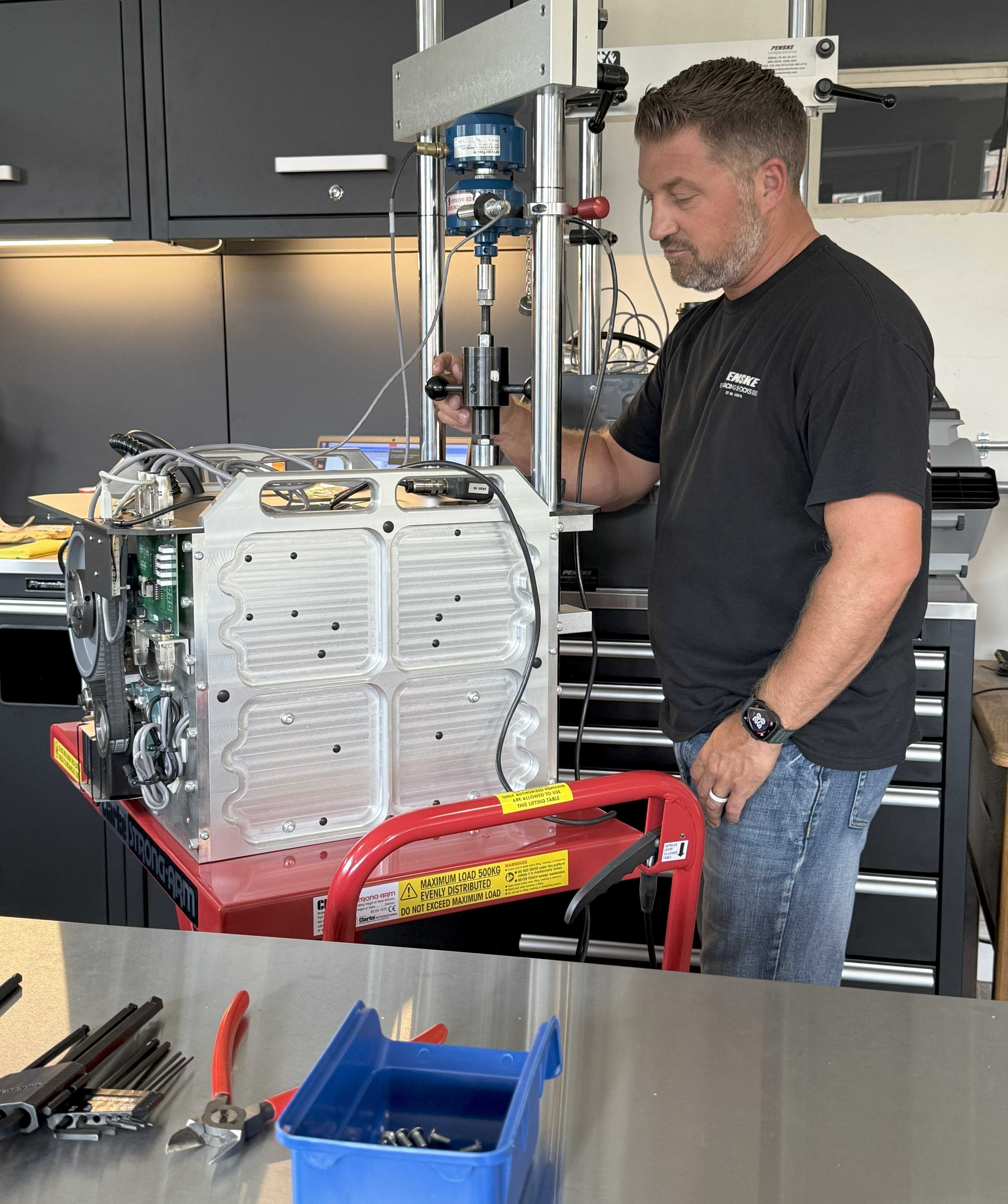
We get this question all the time from team owners and crew chiefs, and it usually comes up at the same stage of a program’s growth. The car is respectable. The driver is giving usable feedback. The team has a baseline setup and a couple shock packages that work. But once a program starts leaning harder on dampers, the difference between “good” and “repeatable” shows up fast.
Most teams start the same way. Springs, bars, clickers, ride height - then make a change, go drive, decide if it helped. That part is familiar. The hard part is when the feedback stops being clean. A change works one weekend and doesn’t show up the next. The driver describes the same issue, but the car doesn’t react the same way. Now you’re stuck in the worst place to be as an operation: you can’t say for sure whether the damper package is doing what the tag says it’s doing, or whether something inside drifted enough to change the story.
That’s the gap a shock dyno fills. A shock dyno measures damper force through a controlled sweep so you can see what the shock is actually producing at different shaft speeds. It’s not a magic performance button, and it doesn’t replace track time. What it does is remove uncertainty. It tells you whether two shocks that are supposed to match really match, whether a clicker change did what you expected, and whether a shock that “feels off” actually changed, or whether the issue is somewhere else in the setup.
Once a racing team has that capability, the tuning process gets cleaner. Instead of guessing around symptoms, you can verify the damper baseline, make changes with intent, and keep notes that stay relevant week to week.
So the decision is real: keep renting dyno access, or buy a shock dyno and bring it in-house?
There isn't one answer that fits everyone. But there's usually a right answer for your operation, and it comes down to how often you're making damper decisions, how much development you're doing, and how much shock dyno access is limiting your ability to move quickly. Whether you're exploring rental testing services or considering ownership, understanding your program's needs is the first step. Let's walk through it the same way I talk teams through it: straight and practical.
.jpg?width=635&height=423&name=PRS-Blog-Products%20(1).jpg)
Renting Shock Dyno Time: The Real Costs Beyond the Hourly Rate
Most teams start by renting a shock dyno because it’s the smart move early. You get access to shock dyno testing without tying up capital, and if you’re only checking shocks occasionally, the math is hard to argue with. The problem is that programs don’t stay in that mode for long once dampers become a real tuning lever instead of just a maintenance item.
The obvious cost is what you pay for dyno access, and if you’re testing regularly, it compounds over a season. But the cost that frustrates racing operations people the most is time and timing. Racing doesn’t care about a shop calendar. Driver feedback doesn’t show up neatly when it’s convenient to schedule a test. It shows up when the car is loaded, when track conditions are changing, and when you’ve got a narrow window to react before the next session or the next weekend.
When you’re renting, your development schedule becomes dependent on someone else’s availability. You find something at the track, you want to verify it while it’s fresh, and now you’re working around another facility’s schedule to get the shocks on the machine. In the meantime, you either show up the next weekend guessing, or you make changes based on feel alone and hope you didn’t just move two variables at once. That’s how good teams burn time: not because they aren’t working, but because they can’t close the loop fast enough to know what actually changed in the dampers.
Renting also adds friction in the process itself. Getting shocks to and from a facility takes time. Coordinating schedules with external resources takes effort. Testing on equipment you don’t control means adapting to someone else’s workflow and procedures, which can make it harder to keep your own process consistent. None of that is wrong, it’s just reality. And it slows down the learning loop, which is the thing you’re trying to accelerate in the first place.
The other hidden cost is what renting does to experimentation. When access isn’t immediate and convenient, teams naturally become conservative about what they test. You focus on what you’re sure you need. The “what if” idea gets pushed off. The odd driver comment that you should explore gets written down and forgotten. You stop iterating, not because you don’t want to, but because the barriers are just high enough to make you selective. Over time, that becomes damper development you never did, and you don’t notice it until you’re racing teams that are learning faster than you are, because they can verify, compare curves, and validate changes on their own schedule.
Here’s the important part: renting is still the right answer for a lot of teams. If your schedule is limited, if shocks are mostly a verification step for you, or if you’re not actively developing and refining damper packages, renting keeps capital free and keeps the operation flexible. In racing, there are plenty of places money can make you faster before a shock dyno ever will.
But if you’re already living in the cycle of “we need dyno access, we can’t get it when we need it, so we’re guessing,” that’s a signal. Not that you must buy a shock dyno. Just that access is becoming a performance limiter, and at that point it’s worth taking the ownership conversation seriously.
.jpg?width=1200&height=800&name=PRS-Blog-Ads%20(3).jpg)
Owning a Shock Dyno: What It Takes to Run Reliable In-House Testing
If that last section feels familiar, it's because this is usually how the conversation turns. Renting starts out clean and logical. Then access becomes the limiter. And that's when teams start looking at ownership as a way to get control back.
Here's what really changes when you own a shock dyno: you test when you need to, not when it's convenient for someone else. You can iterate without watching the clock or rationing ideas based on session costs. And you build real shock knowledge inside your program because the people doing the testing are your people, working on your shocks, solving your specific problems. Over time, that creates a competitive advantage that's hard to replicate, because you're learning faster than teams who are still working around rental schedules.
Ownership also means you control the process. Your baseline data stays consistent because you're using the same equipment, the same procedures, and the same software every time. You're not adapting your workflow to match someone else's system, and you're not relying on an outside schedule to confirm what a shock is doing. The data you generate stays in-house, the learning curve stays in-house, and when you find something that works, you're not forced to expose your development just to get access to a machine.
For teams doing regular development, testing different configurations, validating setup changes, or simply trying to understand what the shocks are actually doing is the kind of access that pays back faster than most people expect. You stop losing weekends to guesswork. You stop second-guessing whether a change actually did what you thought it did. And you stop leaving development ideas on the table because it isn't worth the hassle to test them.
Now, ownership does require planning. You need space for the dyno and a clean place to work. You need a stable setup and consistent power because you're dealing with precision measurement. The software matters too. The Roehrig/MTS SYD line, for example, is typically run on Shock6 software from MTS Systems, which is built around test routines and data analysis, and the real point is that once the system is set up correctly, your workflow becomes repeatable.
A shock dyno also needs to be treated like any other precision tool. Calibration and verification matter because if the numbers drift, you're making decisions based on bad information, and that can put you further behind than if you hadn't tested at all. Plan for ongoing upkeep, occasional software updates, and someone on the team who knows how to keep the system running properly. Dyno calibration and maintenance services are available to keep systems accurate over time. It's not complicated, but it is part of the commitment.
The biggest factor, though, is having someone who can actually use the data. A shock dyno doesn't create knowledge, it reveals it. The teams that get the most value have someone who can translate driver feedback into a test plan, recognize patterns in the curves, and make setup decisions confidently. If that person is already on your team, you're ready. If not, training takes time, but it's an investment that builds capability you'll use for years. Understanding how to read a shock dyno graph is foundational to getting value from the equipment.
A quality shock dyno is a real investment, and it should be treated like one. But if you're planning to run seriously for the next few years, and dyno access is already limiting how fast you can develop, ownership starts to look less like an expense and more like infrastructure, something that makes the entire operation faster, smarter, and more consistent.
Rent vs Buy a Shock Dyno: How to Decide by Racing Program Type
Once a team gets serious about bringing shock dyno testing in-house, the first question is usually cost. How often are we going to use it, what does it replace, and does it actually make the program faster and more consistent?
The truth is the value looks different depending on what kind of program you run, because the value of a shock dyno isn't only what you spend on access. It's what you stop losing in time and delayed decisions. The teams who get the most out of owning aren't always the ones with the biggest budgets. They're the ones whose racing schedule and development needs make testing a weekly tool instead of an occasional check.
For weekly short track teams, the value is straightforward because the rhythm is relentless. The car runs, the track changes, the driver feedback evolves, and you're making damper decisions constantly. If you're racing every weekend, you don't have the luxury of waiting until mid-week to verify something you felt at the track. You either show up next weekend with confidence, or you show up hoping the same guess works twice.
This is also where equipment selection starts to match the reality of the program. Penske's S-Link PHD-2 and Penske's "Roehrig Inspired 'SYD' Dyno Line" are both positioned as in-house options for teams that want consistent testing access and a repeatable process. From an operations standpoint, the bigger return isn't just what you stop paying for access, it's what you gain in speed and consistency. You can confirm shocks match, validate what a clicker change actually did, and catch rebuild issues before race day. Over time, that consistency becomes speed, because you're not tuning through uncertainty.
Road racing and sports car programs justify ownership differently. The calendar might not be every weekend, but the development cycles are deeper. You're dealing with different surfaces, corner types, and a wider operating window. The damper decisions aren't only about what worked last event, they're about understanding why something worked and whether it will translate to the next track. Dyno access becomes part of the R&D process: validating direction, comparing changes, and building a database that actually means something over time. The value isn't in frequency. It's complexity and confidence.
Multi-car operations are another place ownership makes sense sooner than teams expect. The dyno stops being a tool for tuning and becomes a tool for standardization. Matching shocks across cars, verifying rebuilds consistently, and keeping baseline data clean becomes a real operational advantage. Without it, the program spends hours diagnosing whether a handling difference is setup, driver, tire, or simply that one car has a damper package that isn't truly matched. When the dyno is in-house, you control that variable.
At the highest levels, teams run in-house dynos because the competitive window is tight and the development pace is constant. That's not about having money to burn. It's about eliminating delay. When you can test immediately, you can make decisions immediately, and you can iterate faster than the next team.
The simplest way to think about it is this: renting works when you can schedule testing around your racing life. Ownership starts making sense when racing life is forcing you to schedule around testing. If you're frequently in a position where you need answers quickly, that's when the dyno becomes less about cost and more about operational control.
And that's why the conversation should never be only about purchase price. The teams who justify ownership most easily are usually the ones already paying for the consequences of limited access - in rushed decisions, lost testing opportunities, and development that moves slower than it should.
Shock Dyno Testing: A Practical Way to Decide What’s Right for Your Program
Most teams don't struggle with the math as much as they struggle with the friction. The dollars are easy to price out. The harder part is dealing with the delays, the scheduling, the shipping, and the reality that driver feedback doesn't show up when it's convenient. That's why the decision usually isn't "can we afford it?" The decision is "what's limiting us right now?"
There isn't a universal answer, and there shouldn't be. If your schedule is limited and dyno testing is occasional, renting can be the smartest move. It keeps capital free and gives you access when you actually need it. But if your program is making frequent damper decisions and doing real development, ownership starts to look less like a purchase and more like infrastructure, something you rely on the same way you rely on the rest of your shop process.
If you're waiting on dyno access more than you're waiting on anything else, that's the bottleneck. And once access becomes the bottleneck, the conversation changes.
Because what ownership actually gives you is simple: control of your timeline, a faster feedback loop, and a consistent process you can trust. It keeps your data in one place, it helps you build real shock knowledge inside your program, and it lets you validate changes when the program needs answers, not when a calendar opens up.
And here's the tipping point most teams recognize immediately: if you're already frustrated by rental limitations, you've probably already crossed the line. If you're making damper decisions based on schedule convenience instead of what the program needs, that's the sign.
If you're on the fence, reach out to discuss your program and we can help teams think through whether renting or owning makes sense for their operation, and what type of dyno setup fits the level you're running at.