


Nitrogen Charging in Racing Shocks: The Critical Factor Most Racers Overlook

Most drivers start suspension tuning with springs, clickers, ride height, and tire pressure. You make a change, go drive, and decide if the car is better or worse. That part is straightforward. The hard part is getting the results to repeat.
That's where nitrogen pressure comes in.
Nitrogen charging isn't the exciting part of a shock, but it keeps your damping consistent run after run. When pressure is off, the car sends mixed signals. It might feel decent early, then drift. Or it might feel harsh and uncooperative, even when the rest of the setup is close.
These symptoms are easy to misread. You can spend hours chasing springs and clickers when the real issue is unstable nitrogen pressure or incorrect pressure for your application.
This guide covers what nitrogen does inside the shock, what "too low" and "too high" feel like, and how to manage it with a practical, repeatable routine. Once the foundation is stable, every other adjustment makes more sense.
What Nitrogen Pressure Does Inside a Shock
A shock absorber controls motion. Every time your suspension moves (over a bump, under braking, or when the car takes a set in a corner) the shocks manage how fast that movement happens.
That's damping. (For more on suspension tuning fundamentals, check out our guide on how shocks control spring motion.)
Damping is how your shock resists motion. It doesn't stop the suspension from moving, but it controls the speed and prevents pogo-stick oscillation.
Damping only feels consistent if the shock's internal oil stays consistent. That's where nitrogen comes in.
Inside most performance shocks, the oil works with a pressurized gas charge, typically nitrogen. It's there for consistency.
Nitrogen Pressure Prevents Oil Aeration (Foaming) When a shock works hard, pressure changes quickly inside the body. Without sufficient internal pressure, the oil aerates. Tiny bubbles mix into the fluid. The shock still functions, but damping becomes inconsistent because aerated oil doesn't flow through valves the same way clean oil does.
itrogen Pressure Helps Prevent Cavitation in Shocks Cavitation occurs when the local pressure of the shock oil drops below its vapor pressure, causing microscopic vapor bubbles to form in the fluid. In other words, the oil is locally boiling due to low absolute pressure. When pressure recovers, those bubbles collapse violently, creating noise, force loss, heat, and internal component damage. Important: cavitation doesn't mean air is leaking in. It's purely an oil pressure issue. Those collapsing bubbles create sudden changes in damping feel, sometimes subtle, sometimes dramatic. Either way, it creates messy feedback, and messy feedback kills good tuning.
.png?width=493&height=502&name=image%20(3).png)
Nitrogen Pressure Sets Baseline Shaft Force and Response The gas charge creates a small, constant push inside the shock. It doesn't "spring" the car in most designs, but it influences how the shock returns and how stable the damping feels, especially when the suspension cycles quickly.
Why Use Nitrogen Instead of Compressed Air in Shocks? Nitrogen is dry. Regular air carries moisture, and moisture contributes to pressure changes and inconsistency as temperatures swing. Nitrogen removes that variable. The goal is repeatability, not magic performance.
Nitrogen pressure keeps your damping consistent. Springs hold the car up. Valving controls the motion. Nitrogen helps the shock deliver that control the same way, run after run, instead of drifting as things heat up and the suspension works harder.
Wrong Nitrogen Pressure: 3 Ways It Hurts Shock Performance
Nitrogen pressure is one of those details that gets ignored until it can't be. When pressure is off, the symptoms rarely show up as clean, obvious failures.
Instead, it shows up as "the car feels weird," or "it won't do the same thing twice," or "the setup is gone today." That's when the chasing starts (clicks, springs, ride height, tires, anything adjustable). When nitrogen pressure isn't correct, the feedback from the chassis gets noisy. Changes are still being made, but the foundation underneath them isn't stable.
What Happens When Shock Nitrogen Pressure Is Too Low When nitrogen pressure is too low, the shock aerates its oil under hard use. It may not be obvious right away because the car can feel fine at the beginning of a run, but as heat builds and the suspension keeps cycling, damping loses consistency. The pattern is familiar: the car starts responsive and then slowly gets vague. Impacts feel softer, but not in a controlled way. Just mushier. The car may take a set differently corner to corner, or lap to lap, and the typical response is adding clicks to get control back, except the improvement never sticks. Simple example: it feels solid on lap one, and by lap 10 the car is moving around more than it should, especially in transitions, bumps, or braking zones.
What Happens When Shock Nitrogen Pressure Is Too High When nitrogen pressure is too high, more internal force is being added than the shock was designed to carry for that setup. The result usually isn't dramatic. It's a car that feels harsher, less compliant, and less willing to settle. Over bumps and surface chatter, it feels like the suspension is skipping instead of absorbing. That shows up as reduced mechanical grip and a sharper, more nervous ride, especially on entry or mid-corner when the tire is working hard. Simple example: instead of the tire staying connected over small ripples, the car "skates," and it feels like it's on top of the surface, not in it.
What Happens When Nitrogen Pressure Isn't Checked Regularly Even if pressure was correct at some point, it doesn't stay that way forever. Seals aren't perfect, temperature swings matter, and time matters. Without regular checks, a setup can drift without a clear reason. Pressure bleeds off gradually, ambient temperatures shift the baseline, and then heat from use changes it further. That's how a car ends up getting tuned around a problem that isn't actually springs or valving. It's a pressure baseline that moved. Low pressure tends to show up as inconsistency and fade, high pressure tends to show up as harshness and reduced grip, and never checking it tends to show up as confusion.
Suspension Troubleshooting: What Nitrogen Pressure Issues Get
Mistaken For
Nitrogen pressure rarely feels like "a nitrogen problem." It feels like a setup problem. And because the symptoms overlap with a lot of other suspension issues, it's easy to spend an entire day fixing the wrong thing.
The most common misdiagnosis is blaming the clickers. When the car starts feeling inconsistent, the instinct is to chase it with compression and rebound adjustments. Sometimes that helps, especially if the baseline was close. But when nitrogen pressure is off, clicker changes tend to feel temporary. A couple clicks might improve the feel for a run, then the car drifts again as conditions change and the shock keeps cycling. The tuning process starts to feel like guesswork, not progress.
Spring rate is the next one that gets blamed, and for good reason. It's a big lever. But incorrect nitrogen pressure can mimic spring problems. Too much pressure can make the car feel sharp and nervous, like it rides on top of the track instead of settling into it. Too little pressure can make the car feel lazy or vague, like it's not holding itself together through transitions. Those sensations sound spring-related, even when the springs aren't the real issue.
Tires and "track conditions" are another easy target. Tires heat cycle, pressures change, the surface rubbers in, the cushion moves around, and weather swings can absolutely change what the car wants. The problem is that nitrogen pressure drift can create the same story: the car feels fine early, then doesn't feel the same later, so the assumption becomes "the track went away" or "the tires fell off." Sometimes that's true. Other times it's the shock changing before anything else did.
There's also a common assumption that if a shock isn't leaking, it's healthy. That's not always how it plays out. A shock can look totally fine from the outside and still have pressure that has drifted enough to change the feel. That's why "it must be valving" becomes the default conclusion, because nothing looks broken, so the only explanation left is something internal and complicated.
The thread that ties all of this together is repeatability. If the car won't repeat, it's almost impossible to tune it confidently. Nitrogen pressure matters because it supports consistency. When it's stable, every clicker change and spring decision gets clearer feedback. When it isn't, the whole process turns into chasing symptoms, and the symptoms don't always lead back to the cause.
How to Troubleshoot Nitrogen Pressure (Before Touching Clickers)
Troubleshooting only works when variables stay controlled. That's why nitrogen pressure belongs near the top of the checklist. It affects consistency, and consistency is what makes every other tuning decision meaningful.
The first step is establishing a baseline. That means knowing what nitrogen pressure is in the shocks right now, and knowing when it was last checked or serviced. If either answer is unknown, that's already a direction. A setup can't be repeatable if the starting point isn't repeatable.
Next is paying attention to when the issue shows up. If the car feels solid early and then slowly fades into vagueness later in the run, that pattern usually points toward a consistency problem, not a balance problem. If the car feels harsh from the first lap, especially over small bumps and chatter, that's a different pattern. The goal isn't diagnosing from feel alone. The goal is using feel to decide what to verify first.
It also helps to separate a one-off moment from a trend. One weird corner can be traffic, a bad entry, or a hit that didn't happen the same way twice. A trend is when the same sensation shows up in the same places, or gets worse as the run goes on. Nitrogen-related problems tend to behave like trends because heat and cycling build progressively.
Once nitrogen pressure is being checked or corrected, the smartest move is keeping everything else still. Clickers don't need to be touched until a stable baseline is confirmed. Otherwise the notes become impossible to trust because multiple variables changed at once. That's where a lot of race days disappear: pressure drifts, clickers get moved, tire pressures get chased, and by the end nothing is clearly better because nothing was isolated.
The simplest troubleshooting mindset is this: stabilize the foundation first, then tune. When nitrogen pressure is known and consistent, the car's feedback gets cleaner. And when the feedback is clean, tuning stops being a spiral and starts being a process again. For more on systematic damper tuning, download our free guide.
When Nitrogen Needs Attention (and What To Do About It)
Nitrogen pressure is part of tuning, but it's also part of maintenance. That line matters.
A pressure check is normal. Building a routine around it is smart. But when pressure doesn't hold, or the car keeps showing the same symptoms after the baseline is verified, that's not "more tuning." That's the system asking for attention.
A few signs it's time to stop chasing adjustments and start thinking service: pressure that drifts noticeably between checks, a setup that keeps changing weekend to weekend without a clear reason, or damping feel that falls off in a way that can't be tuned around. A shock can look perfectly clean from the outside and still be moving away from its baseline internally. That's why relying on leaks alone can be misleading. Leaks are obvious. Drift isn't.
This is also where it's worth being honest about what belongs in a garage and what belongs with a shock service provider. Checking and managing nitrogen pressure is part of normal prep. Recharging and servicing nitrogen-charged dampers is typically handled by a qualified shop or the manufacturer, because it requires the right equipment, the right procedures, and the right understanding of that shock's design. (Learn more about shock maintenance and rebuilds.)
The good news is that service conversations go fast when the right information shows up with the car. A few notes make a big difference: the current cold pressure, ambient temperature, when the shocks were last serviced, and what the car is doing when the problem shows up. That turns "it feels weird" into something actionable. And once the baseline is restored, the rest of the tuning process usually gets simple again, because the car starts talking clearly.
Nitrogen Charging in Shocks: Key Takeaways and Next Steps
Nitrogen pressure isn't the flashy part of suspension tuning. But it's one of the easiest ways to lose consistency without realizing it. When pressure is wrong, or drifting, the car starts sending mixed signals. Clicker changes don't stick. The setup feels different from run to run. And the tuning process turns into chasing symptoms instead of making progress.
The fix isn't complicated: treat nitrogen pressure like a baseline, not an afterthought. Check it with intent. Keep it consistent. Log it. And when the system won't hold a stable baseline, treat that as a service signal, not a tuning opportunity. Once the foundation is stable, every other adjustment starts to make more sense. (For more suspension tuning fundamentals, check out our top 5 suspension tuning tips.)
And for anyone running Penske, this is exactly how we think about it. Penske's roots are in professional racing, but the goal is the same at every level: repeatable performance, clear feedback, and a shock that does what it's supposed to do every time it's asked.
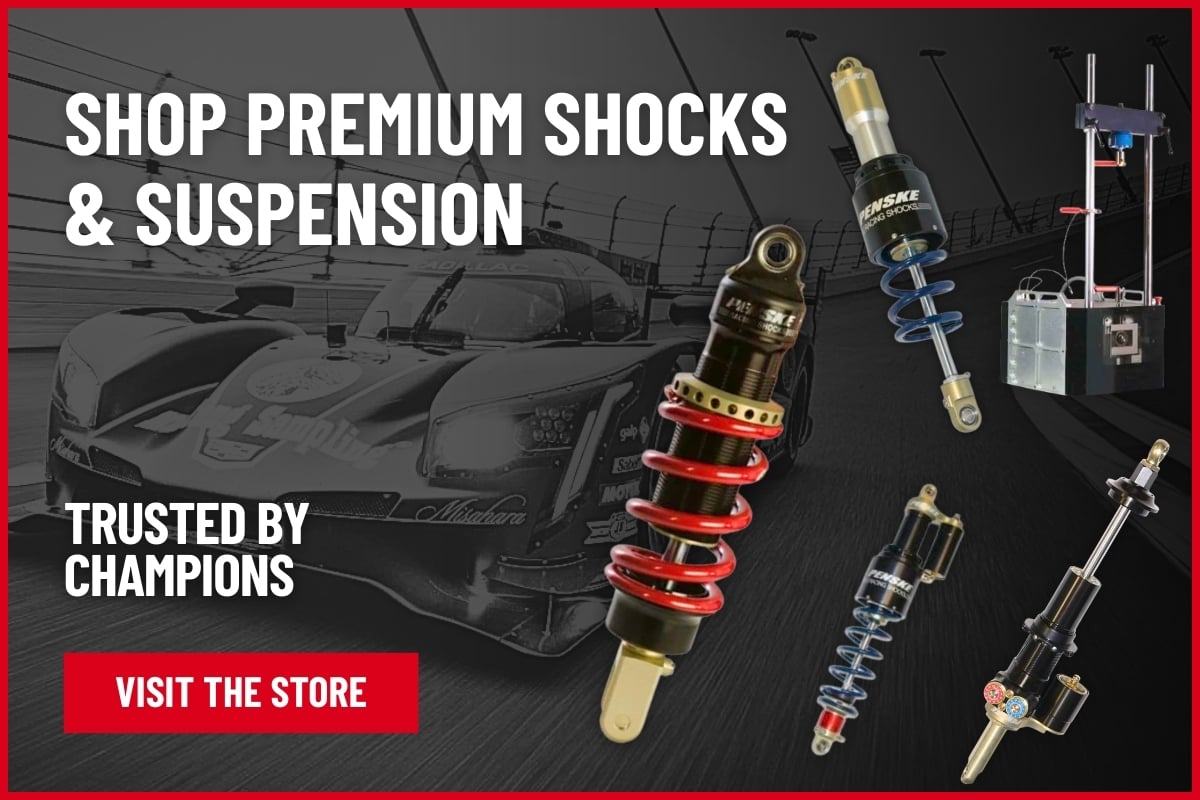
Penske models that use nitrogen charging include:
7300 Series (Single Adjustable): large nitrogen canister options for consistent feel; base valve option for reduced gas pressure
7500 Series (Air Shock "SB" / Small Bore): uses nitrogen area to produce spring load (common left rear late model applications)
8760 Series (Triple Adjustable / Piggyback or Remote): remote canister with larger nitrogen volume; used across drag racing, road racing, and open wheel
8900 Series (Gas-Charged Fork Inserts & Emulsion Shocks / Motorcycle): nitrogen-filled fork cartridges and gas-charged designs to help maintain damping consistency
If the car feels "off" and the adjustments aren't lining up, start with the basics. Confirm the nitrogen baseline first. Then tune from there.