

Inside a Penske Racing Shock Service: What Technicians Actually Check, Replace, and Test

One of the nice things about running Penske racing shocks is that when it's time for service, they can come back through the Penske service process with technicians who know what they're looking at and dyno data that shows how the shocks performed before and after service.
When shocks come in for service, there's a pretty defined process they go through from the time they hit the receiving shelf to the time they get shipped back out. The shocks get reviewed, dyno tested before disassembly, torn down, cleaned, inspected, rebuilt, and dyno tested again before they leave.
Whether you're running sprint car shocks, sports car suspension, or dirt track racing shocks, here's what Penske technicians are actually checking, replacing, and testing during a standard racing shock service.
What Penske Technicians Check During Shock Service
Reviewing the Shock Service Request and Vehicle Information
When the shocks come in, they get received, logged, and put into line for production until a technician pulls the set. The first thing we do at that point is go through the paperwork and figure out exactly what we're working on and what the customer wants done.
Ideally you already filled out the service form with your contact info, vehicle info, and notes about whether it's a straight shock service, a handling issue, or if you want something changed while the shocks are apart. Believe it or not, a lot of people still forget to include contact information, so sometimes you're digging through shipping labels trying to figure out who sent the shocks in before you can even call them.
We also usually recommend not sending springs or mounting hardware unless there's a specific reason to. It just adds freight cost and usually isn't needed for a standard Penske shock rebuild.
Once we know what we're working with, the next step is the pre-dyno.
Why Penske Dyno Tests Shocks Before Disassembly
Before the shocks get taken apart, we dyno test them as they came in as long as they're not physically damaged. That gives us a baseline of what the shock was actually doing before service started and gives the customer a before-and-after comparison once the rebuild is finished.
A lot of times this is where things start making sense, especially if somebody sent the shocks in because the car doesn't feel the same as it used to. If the dyno shows the shock is down a noticeable amount of damping, there's a good chance that's connected to the handling issue they're describing. It doesn't automatically mean the shock needs a completely different setup. Sometimes the racing shocks just need to be freshened up and brought back to where they should be.
The pre-dyno is important because it gives us actual data before anything gets disassembled. Instead of guessing based on feel alone, we can see how the shock was performing when it arrived and compare it to how it performs after the shock service is complete. For more on how to interpret what that dyno graph is actually telling us, check out our guide on how to read a shock dyno graph.
That's also one of the reasons dyno testing matters so much in racing shock service. You're getting a snapshot of how the shock is actually performing before the teardown starts.
Once the dyno is done, we move into disassembly and inspection.
What Technicians Look for During Shock Teardown and Inspection
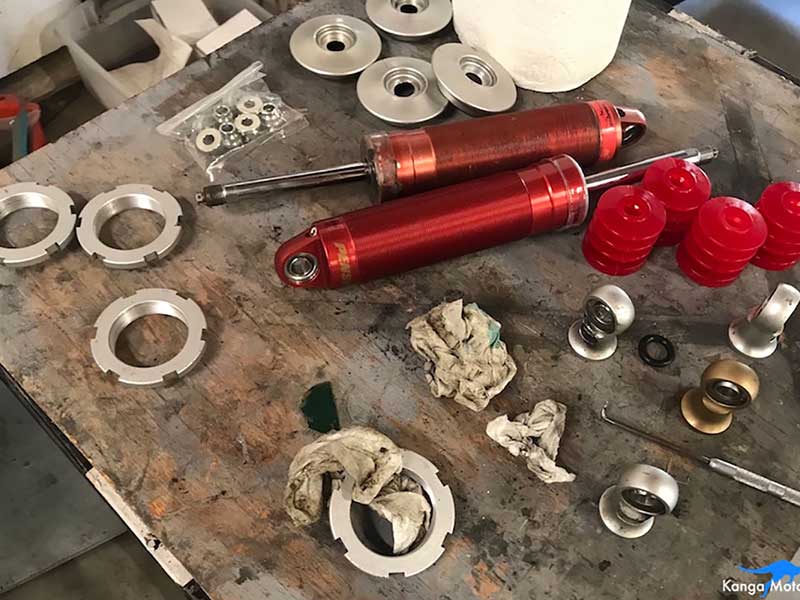
When the shocks come apart, every component gets looked over for wear, damage, or anything that stands out from normal use. Old oil comes out, old shims come out, seals get removed, and the shocks get fully disassembled before cleaning starts.
One thing we run into pretty regularly is shocks showing up extremely dirty. Some of them look like they just went through the mud right before they got boxed up and shipped.
Dirt and contamination are part of racing, so it's not unusual, but heavily contaminated shocks can require additional cleaning time during service.
After teardown, all the parts get cleaned in an ultrasonic tank before inspection and reassembly start.
At that point we're checking everything for wear or damage. If we find something excessively worn, damaged, or a coating that's worn off, we contact the customer, explain what we're seeing, explain what we'd recommend replacing and why, and let the customer decide how they want to move forward.
A lot of handling complaints start making more sense once the shocks are apart and you can actually see what's going on inside them.
Shock Oil Breakdown and Loss of Damping Performance
The biggest thing we see during racing shock service is oil breakdown. Honestly, when you walk through the shop during teardown, you can smell it.
Shock oil breaks down faster than a lot of people realize, especially depending on track conditions and how much the shock is moving. The more movement and heat the shock sees, the more the oil gets sheared down over time.
One of the most common questions we get is how often somebody should service their racing shocks, and the answer usually depends on the racetrack.
If you're running a relatively smooth track, maybe you can go a couple weekends. If you run one really rough weekend on a brutal racetrack, you may want the shocks serviced right after.
A rough track works the shock harder. More movement creates more heat, and more heat breaks down the oil faster. Once the oil starts breaking down, damping performance starts changing too. For more on how damping performance affects your setup, see our post on low-speed vs high-speed damping.
That's part of the reason the pre-dyno matters so much. If the damping numbers are down compared to where the shock should be, the dyno usually tells the story pretty quickly.
How Bent Shims and Impact Damage Affect Shock Performance
The second big thing we see is over-deflected or bent shims.
If you go off course, hit bumps hard, run through grass, or have some kind of impact event, there's a chance you can bend a shim inside the shock. Once that happens, damping performance can change a lot more than people expect.
A bent shim can easily cost you 20, 30, or 40 percent of your damping depending on the damage.
Sometimes customers think they suddenly need a completely different setup because the car feels different, when really the shock just got hurt during an off-track excursion or a rough race weekend. This is one of the most common mistakes we see and too often, racers change spring rates or chase setup adjustments across the rest of the car when what they actually need is a shock rebuild.
If you tune around a worn shock and then eventually rebuild it later, now the setup may suddenly feel too stiff because you compensated for a problem that should have been fixed in the shock itself. Usually the biggest signal is pretty simple: if the car doesn't feel the same as it used to, get the shocks looked at.
That's why anytime the car feels noticeably different after an impact, off-course incident, or rough track weekend, it's a good idea to get the shocks checked before you start chasing setup changes.
What Gets Replaced During a Penske Shock Rebuild
Replacing Shock Oil, O-Rings, and Internal Components
Once inspection is complete, the rebuild process starts. Every O-ring gets replaced during service. Fresh oil goes back into the shock, worn components get replaced as needed, and the shocks get rebuilt using fresh internal parts and shims.
Before reassembly, the components go through ultrasonic cleaning so everything is cleaned up before it goes back together. From there the shocks get rebuilt and assembled back to spec.
A lot of times customers are surprised by how much performance they lost gradually over time because it happened slowly enough that they adjusted to it while driving. Then they get the shocks back fresh and immediately notice the difference.
Why Fresh Shock Oil and Internal Parts Matter
A lot of damping loss happens gradually. The driver gets used to the feel changing over time, so it doesn't always stand out immediately.
That's one reason customers are sometimes surprised by the before-and-after dyno comparison after service. Once fresh oil, fresh shims, and fresh internal components go back into the shock, the difference in performance becomes a lot more obvious.
The shock is simply back closer to where it was when it was fresh.
That doesn't mean every shock needs major internal replacement every time it comes in for service. Part of the inspection process is figuring out what condition the components are actually in and whether something needs replacement beyond standard service.
If we find something excessively damaged or worn during teardown, we contact the customer, explain what we found, explain what we'd recommend replacing, and let them decide how they want to move forward.
How Penske Tests and Validates Shock Performance
Post-Service Shock Dyno Testing and Validation
Once the rebuild is complete, the shocks go back on the dyno for post-service testing. That gives us a direct comparison between how the shocks performed when they arrived and how they performed after service. Customers get to see the before-and-after difference instead of just being told the shocks were rebuilt.
Typically the shocks come back a little stiffer after service because the oil is fresh, the shims are fresh, and the damping is back closer to where it was when the shock was new.
That dyno sheet matters because it validates the rebuild. You're not guessing whether the service corrected the issue or restored damping performance, you can actually see it in the data.

Why Dyno Validation Matters in Racing Shock Service
One thing I always tell people is to use a reputable, qualified rebuild center and make sure they can provide dyno graphs with the service.
At Penske, we also train dealers through shock classes and certified rebuilders learn the same rebuild procedures and service standards we use internally. But regardless of who services the shocks, you want somebody who can show you actual dyno data before and after the rebuild. And a lot of rebuilders out there don't even own a shock dyno.
The dyno sheet matters because it shows where the shock was when it came in and where it ended up after service. Without that, you're mostly relying on feel alone.
That's one of the biggest differences between simply rebuilding a shock and actually validating shock performance after service. If you're serious about understanding what your suspension is doing, our post on racing shocks explained breaks down the fundamentals.
What a Before-and-After Shock Dyno Sheet Actually Shows
The before-and-after dyno comparison is useful because it gives the customer actual data tied to the service.
If a customer sends shocks in because the car feels inconsistent or the handling changed over time, the dyno sheet helps connect what they were feeling to what the shock was actually doing.
Then once the rebuild is complete, the post-dyno shows how the damping changed after fresh oil, fresh shims, and service work. Instead of guessing whether the racing shock service corrected the issue, the dyno graph gives a documented comparison before and after the rebuild.
Final Thoughts on Penske Racing Shock Service
A proper racing shock service is a lot more than just replacing oil and seals. The process includes pre-dyno testing, teardown, inspection, ultrasonic cleaning, replacement of worn components, reassembly, and post-service dyno validation so the customer can see exactly how the shock performed before and after service.
That process helps identify damping loss, worn internal components, and damage before they turn into bigger handling problems or send somebody chasing setup changes in the wrong direction.
Whether you're running street car shocks, motorcycle shocks, or professional-level racing suspension, the service process stays the same: documented performance before, complete rebuild, and validated results after.
Starting at approximately $175 per shock with a typical turnaround of about 5 business days, Penske shock service gives you proof the work was done right.
If your Penske shocks are due for service, or if the car simply doesn't feel the same as it used to, starting with a proper inspection and dyno test usually tells the story pretty quickly.